
Colombia
Coast to Capital: A Week (and a Few Empanadas) in Colombia
Three years ago this month, I landed in Cartagena for what turned out to be one of my favorite trips to date, and I've been meaning to write it up properly ever since. So: happy anniversary to this one — complete with a quick one-minute video I put together right after getting home (old YouTuber habits die hard), in case you want the highlight reel before the full story. After a quick stop to see my parents in Florida, I flew Miami to Cartagena for a trip that covered a walled Caribbean city, a national park, a mountain town most tourists never hear of, and the country's capital, stitched together by a good tour company and an even better appetite.
This was my third trip with Intrepid, the small-group travel company, and if you haven't traveled with them, they're worth knowing about before I get into the itinerary. Intrepid was founded in Melbourne in 1989 by two university friends who'd just spent nine months overlanding from London to Nairobi and came home convinced that small groups and local guides beat the tour-bus version of travel every time. Three decades later, they're a certified B Corp, run trips with local leaders and local transport in more than 100 countries, and channel spending directly into the communities they visit rather than into a chain hotel's corporate account. Their stated goal isn't to be the best travel company in the world — it's to be the best travel company for the world. I've now done three trips with them across three different continents, and the formula holds up every time: small groups, real neighborhoods, and guides who actually live where you're visiting instead of reciting a script.
My one-minute video of the trip!
Two Days Solo in Cartagena
I had two full days in Cartagena before meeting up with the group, and I used them exactly how you'd expect: wandering the old city's bars and shops, and eating my way through as much Caribbean-Colombian food as I could manage. Arroz con coco (rice cooked in coconut milk, slightly sweet, deeply good with anything fried) and arepa de huevo (a deep-fried corn cake with a whole egg cooked inside it) both made an early and repeated appearance.
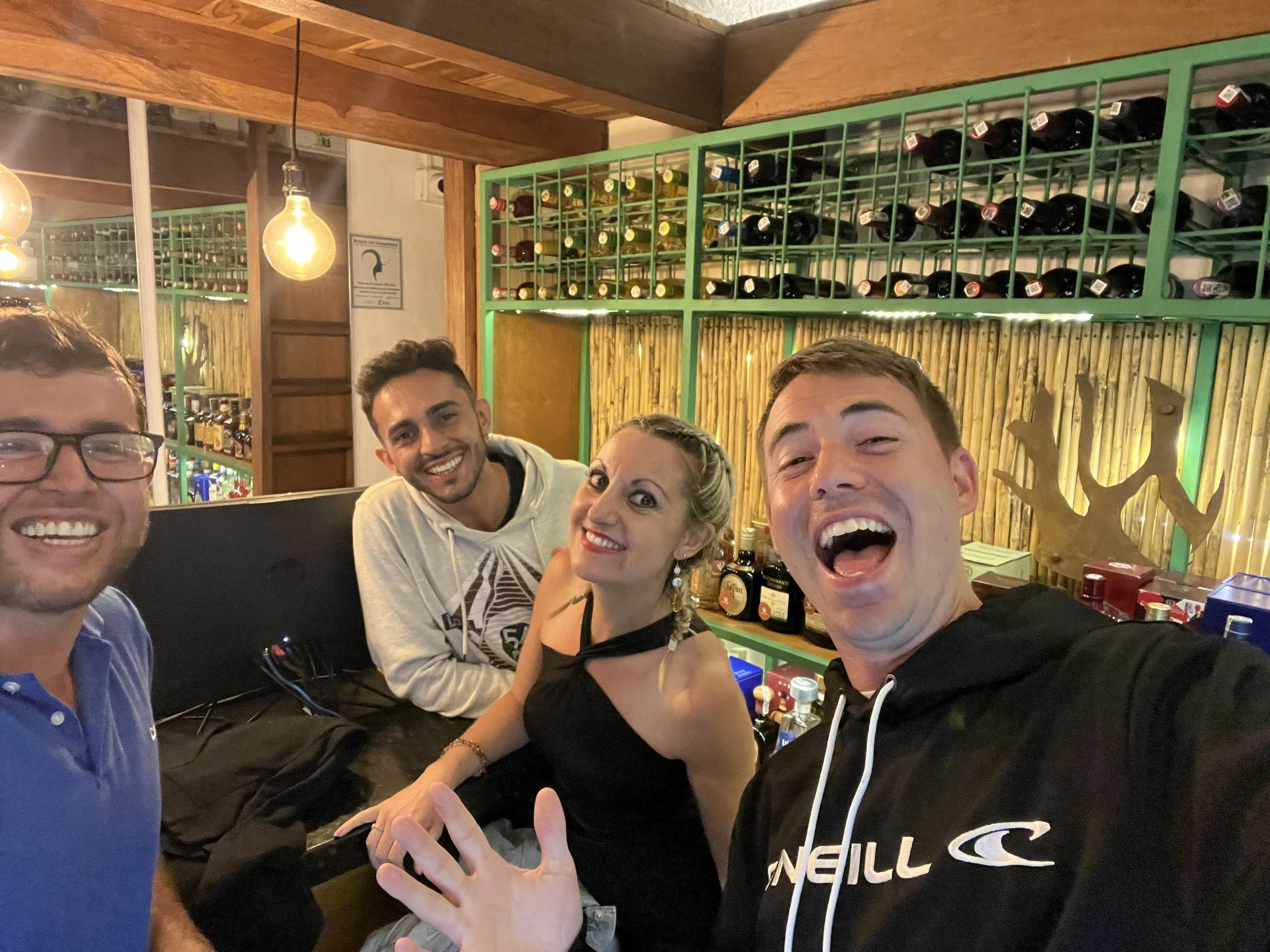
The second night turned into an unplanned reunion — my childhood friend Ethan happened to check in to Cartagena the day before I flew out, which is the kind of coincidence you can't plan and wouldn't believe if it happened in a movie. We met up with his friends for a night out, which turned out to be the perfect send-off before the trip properly started the next morning.
If you've read the San Juan or Seattle posts, you already know a food tour is non-negotiable wherever I land, and Cartagena's did not disappoint. We started at Loncheria Polo Norte, a restaurant run by the same Chinese-Colombian family for generations, serving what might be the best empanadas I've ever had — including a chicken version you won't find just anywhere. I had an extra one on the tour and came back the next day for a third. Consider that your must-visit recommendation, no notes. The rest of the tour was a parade of fruit I hadn't encountered before in my life — some of the freshest, sweetest produce I've had anywhere, and I couldn't have named half of it if you'd quizzed me.
The other half of my solo time went to the beach. A fellow traveler from the group and I hopped a boat out to Palmarito Beach and spent the day exactly the way you'd hope — sunshine, tropical drinks, a DJ, and enough beach games to make the whole day disappear before we noticed.
Cartagena Itself: Walls, Heat, and a Whole Lot of History
Cartagena was founded on June 1, 1533, by Spanish commander Pedro de Heredia, who built his settlement over an existing Indigenous village called Calamarí. Within a few decades it had become one of the Spanish Empire's most important ports for funneling New World gold back to Spain — which made it an obvious target for pirates, including a memorable 1586 raid by Sir Francis Drake. In response, Spain spent roughly two centuries building the massive stone walls and fortresses that still ring the old city today, among them Castillo San Felipe de Barajas, the largest fortress the Spanish ever built in the Americas. Cartagena remains the only fully walled city in South America, and the whole historic center was named a UNESCO World Heritage Site in 1984.
Walking those walls today, it's easy to forget how much firepower went into keeping this city Spanish. Cartagena felt safe to me, even at night. It's not a huge city, but it's a crowded one, and normal precautions go a long way. Salsa dancing is a big part of the nightlife here too, though I'll admit I sat that one out. My honest recap of Cartagena: food, food, food, beaches, a castle, and nightlife, with one important warning label — it is extremely hot and humid, so pace yourself accordingly.
North to Santa Marta and Tayrona National Park
From Cartagena we drove up the coast through Barranquilla to a resort near Santa Marta, then spent the next day in Tayrona National Park. Tayrona sits where the Sierra Nevada de Santa Marta — the world's highest coastal mountain range — drops straight down into the Caribbean, and the park is named for the Indigenous Tayrona civilization that once thrived here; their descendants, the Kogi people, still live in the surrounding mountains and consider this range the literal heart of the world. The hike itself was beautiful and legitimately hot, but it ended with exactly the reward you'd want: ocean time on one of the park's beaches, which made every sweaty step worth it.
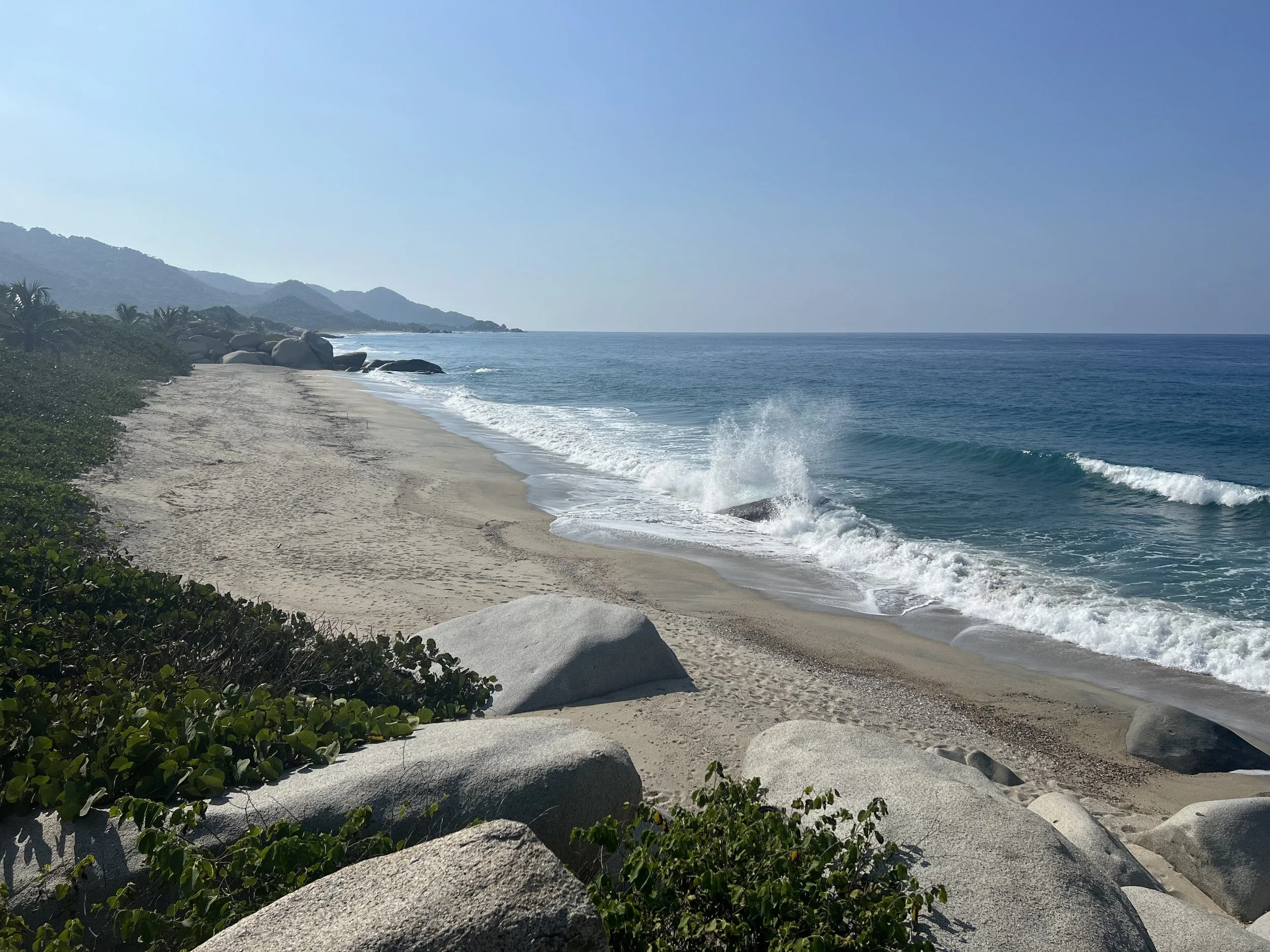
Tayrona National Park, where the Sierra Nevada — the world's highest coastal mountain range — meets the Caribbean, granite boulders and all.
The Long Bus to Bucaramanga, and On to Barichara
Next was a long bus ride to Bucaramanga, long enough that I actually got some rest, followed by a stay in a small town called Barichara that ended up being the highlight of the entire trip. Barichara is routinely called the most beautiful town in Colombia, and it earns it: colonial architecture protected as a national monument since 1978, pale stone streets, whitewashed buildings, and a level of quiet that makes it feel like tourists are still a relatively new concept here. Its name comes from the Guane language and means "place of rest," which felt exactly right.
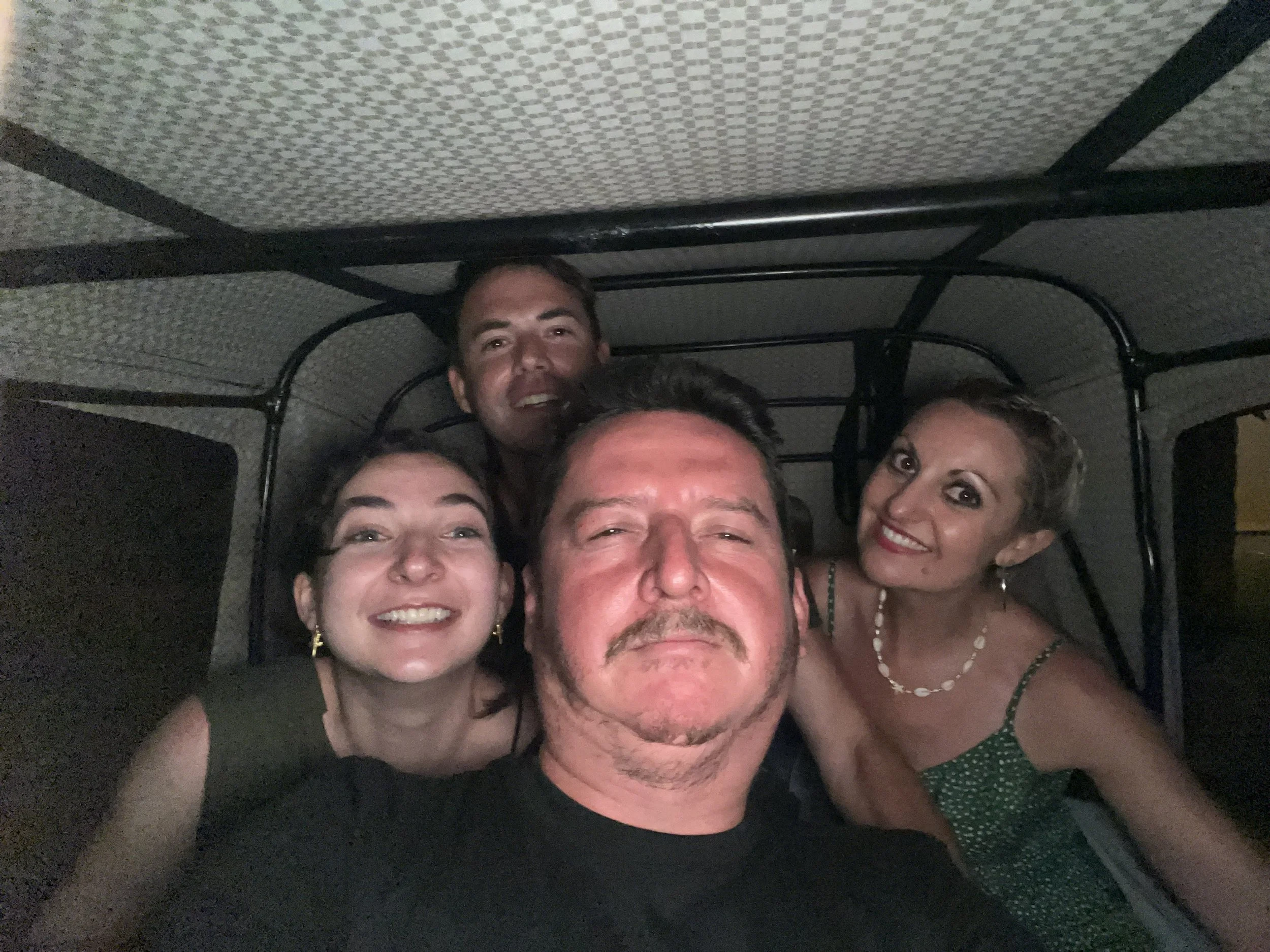
Over three days, the town more or less adopted us. By the end, I think everyone in Barichara knew both my name and my fellow traveler Verity's, and the local "taxi" driver (really a tuk-tuk) started taking us on evening tours that were less about transportation and more about introducing us to everyone he knew. We danced in the streets and took selfies with what felt like half the town.
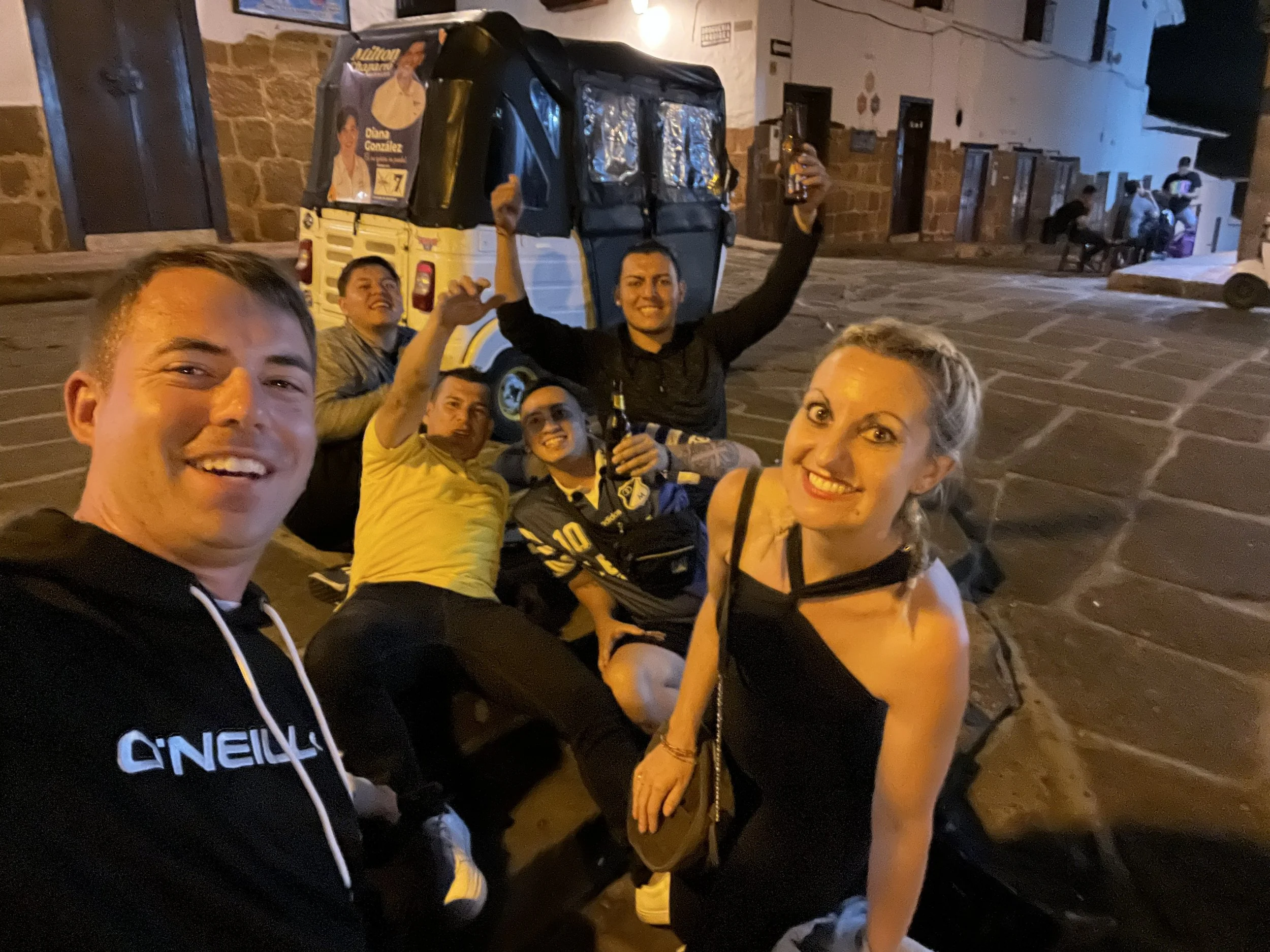
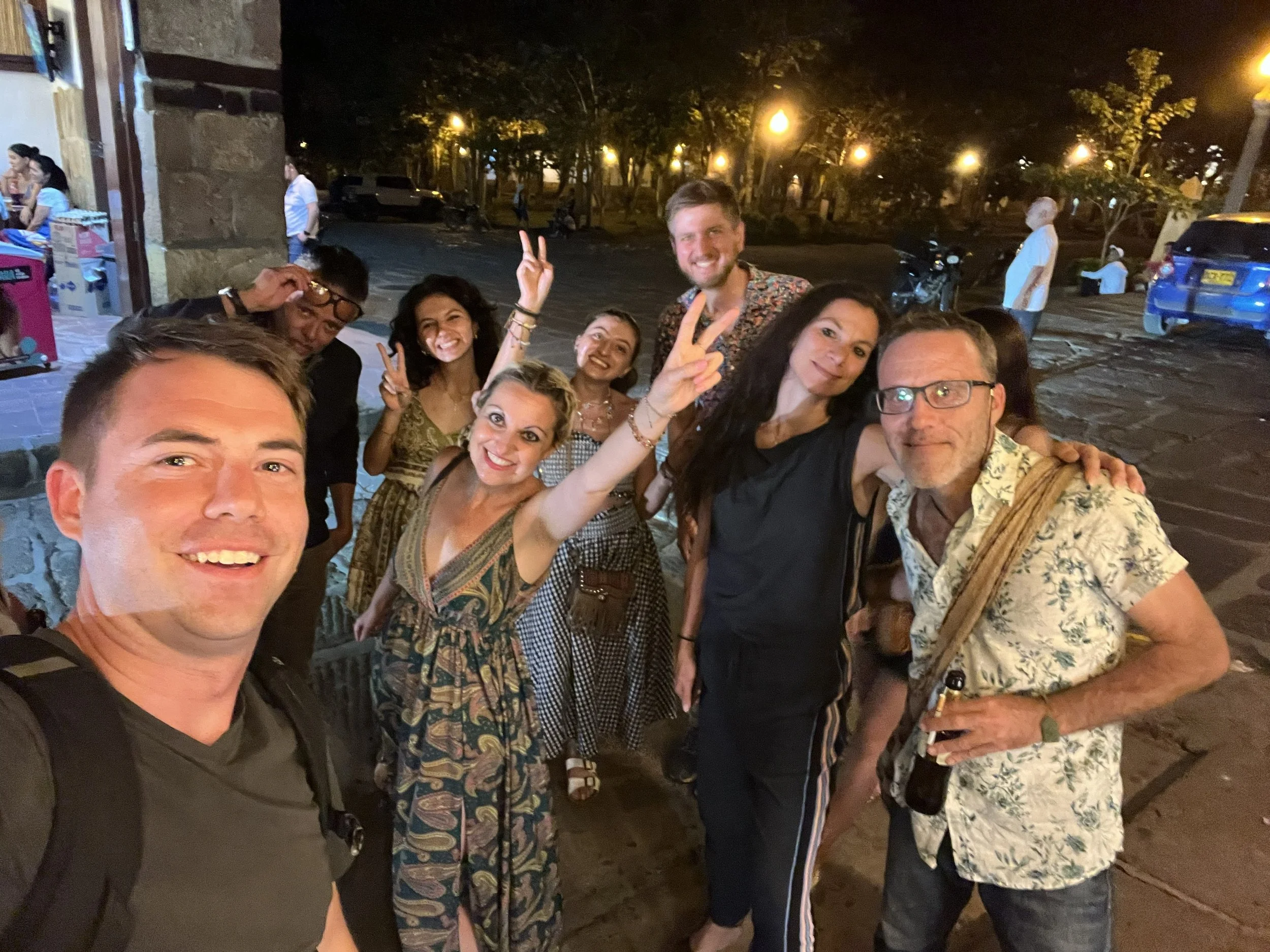
Barichara also happens to sit in the heart of Colombia's outdoor-adventure country, and it delivers: ziplines, mountain hikes, and white water rafting are all on the table. I did the rafting, spent the first five minutes convinced I was about to fall in, and then had one of the most fun afternoons of the trip once the nerves wore off — highly recommend. We also hiked extensively and toured a local coffee farm, which felt appropriate given that Colombia is the world's second-largest producer of Arabica coffee and its third-largest coffee exporter overall, behind only Brazil and Vietnam. And, in the spirit of full transparency about Barichara's culinary traditions: this region is also the birthplace of hormigas culonas (literally "big-butt ants"), a fried, salted local delicacy people have been eating here since long before the Spanish arrived. I didn't try them in Barichara. Bogotá would take care of that.
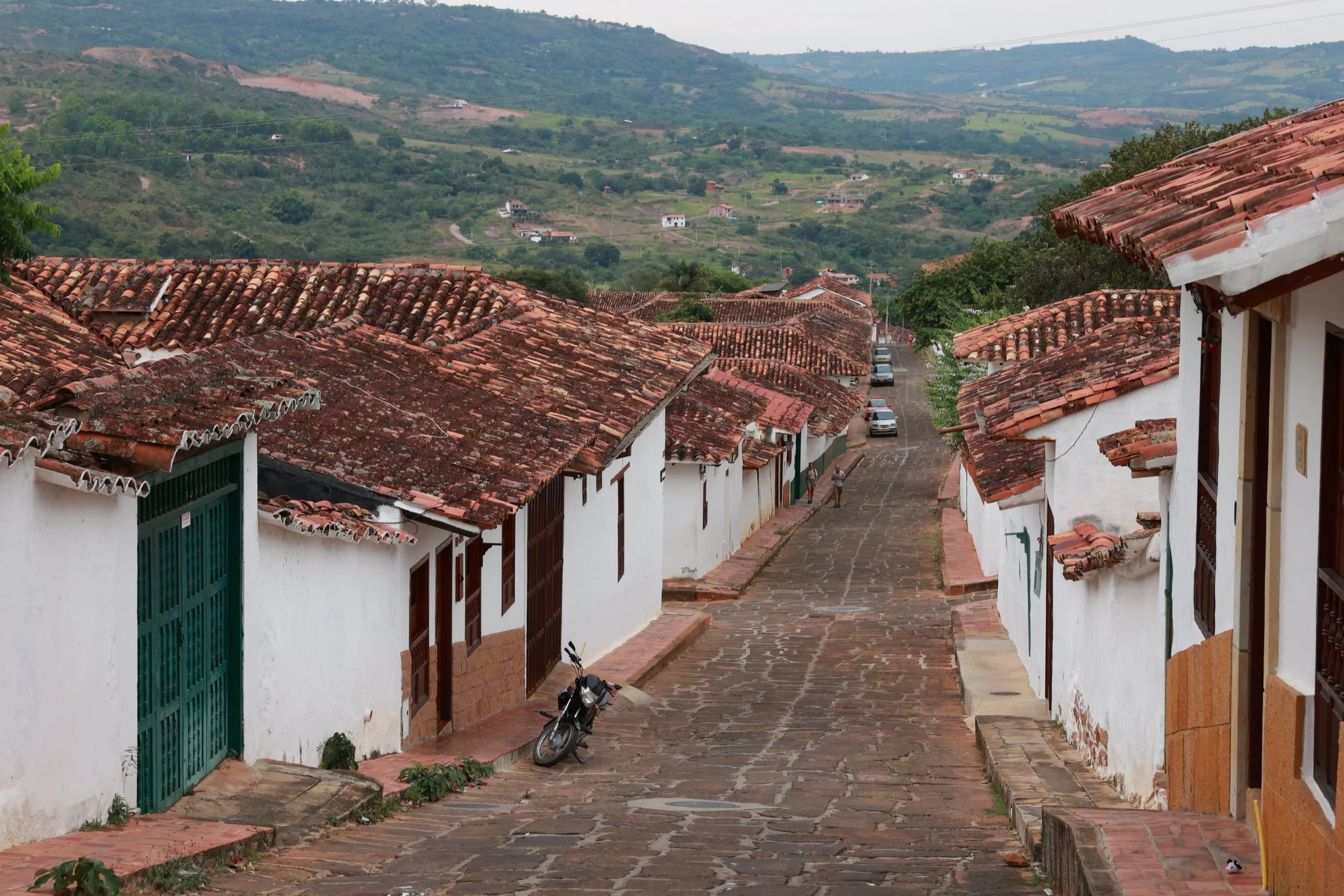
A quiet cobblestone street in Barichara, tile roofs and whitewashed walls running straight into the Santander countryside.
Bogotá: The Capital, in Full
The last stop was Bogotá, and it's where the trip shifted from scenery to substance. Colombia carries a well-known reputation tied to decades of drug trafficking violence and armed conflict, and it was interesting to hear local guides speak candidly about how the country has worked to move past that chapter, particularly since the 2016 peace accord — progress that's real but that locals themselves describe as ongoing rather than finished. Safety-wise, I felt completely comfortable during the day and noticeably less so after dark; normal precautions apply, with extra care once the sun goes down.
Bogotá rewards the effort, though. Cerro de Monserrate rises to over 3,100 meters above the city and is reachable by cable car or funicular, and the views from the top — a 17th-century sanctuary included — are worth setting aside a half day for. Museo del Oro (the Gold Museum) is another essential stop: it holds tens of thousands of pieces of pre-Hispanic indigenous gold work, the largest collection of its kind in the world, and it's a humbling look at craftsmanship that predates the Spanish arrival by centuries.
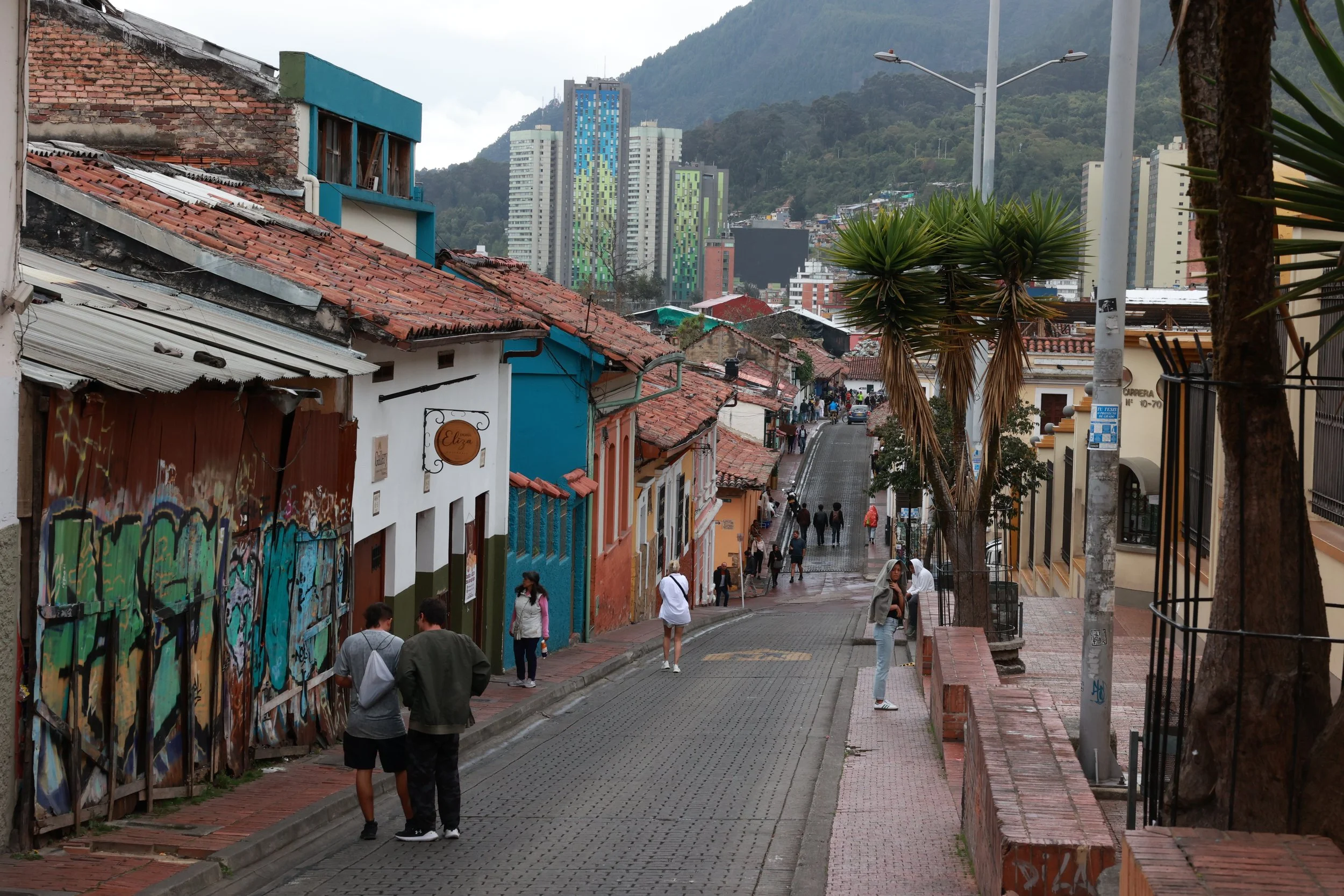
A colorful, graffiti-lined street in Bogotá's La Candelaria neighborhood, with Monserrate rising in the background
Food-wise, Bogotá peaked with dinner at El Chato, one of the highest-rated restaurants in Latin America, led by chef Álvaro Clavijo — a Bogotá native who trained in Barcelona and Paris and cooked at Per Se and Noma before coming home to open his own place. (I'd originally thought Clavijo also owned a restaurant called El Espíritu in Medellín — turns out that's a different restaurant entirely; his other projects are Selma, right next door to El Chato in Bogotá, and El Curato, a newer spot in Cartagena.) El Chato was also where I ate ants for the first time, worked into a butter spread that eased me in gently. I got braver as dinner went on and eventually worked up to the full-sized hormigas culonas themselves: whole ant abdomens, eaten exactly the way it sounds. For what it's worth, they taste a lot like popcorn.
What I Missed (So You Don't Have To)
A trip through Cartagena, the coast, Barichara, and Bogotá still leaves plenty of Colombia untouched, and a few things are already on my list for a return trip:
Medellín — the "City of Eternal Spring," known these days for its cable-car public transit system and dramatic transformation over the past two decades. I ran into other travelers that had been here on their itinerary, and they insisted I cannot leave Colombia without a trip to Medellín. But now I have the perfect reason to return to Colombia!
The Coffee Triangle (Salento and Valle de Cocora) — the postcard version of Colombian coffee country, with wax palms taller than anything else in the valley.
Guatapé and El Peñol — a candy-colored lakeside town beside a granite monolith you can climb for one of the best views in the country.
Ciudad Perdida (the Lost City) — a multi-day trek through the Sierra Nevada to Tayrona ruins older than Machu Picchu.
Caño Cristales — a river nicknamed the "liquid rainbow" for the colors its aquatic plants turn during a narrow seasonal window.
Three Years Later
What's stayed with me most, three years on, isn't any single stop — it's how consistent the vibe was across such a different country. The coast is loud, proud, and a little laid-back; the interior is quieter but every bit as warm. Cartagena will dance with you at midnight, Barichara will learn your name in three days flat, and Bogotá will hand you a plate of ants and a crash course in the country's history in the same afternoon and somehow make both feel completely normal. I made friends I still talk to, ate things I still think about, and came home with the kind of trip that gets better in memory rather than worse — which might be the best argument for finally writing it down.
Photos from the whole trip are up in the gallery: the walls of Cartagena, Barichara at golden hour, and yes, the ants. If Colombia's on your list, or you've already been: what's on your itinerary that I missed?
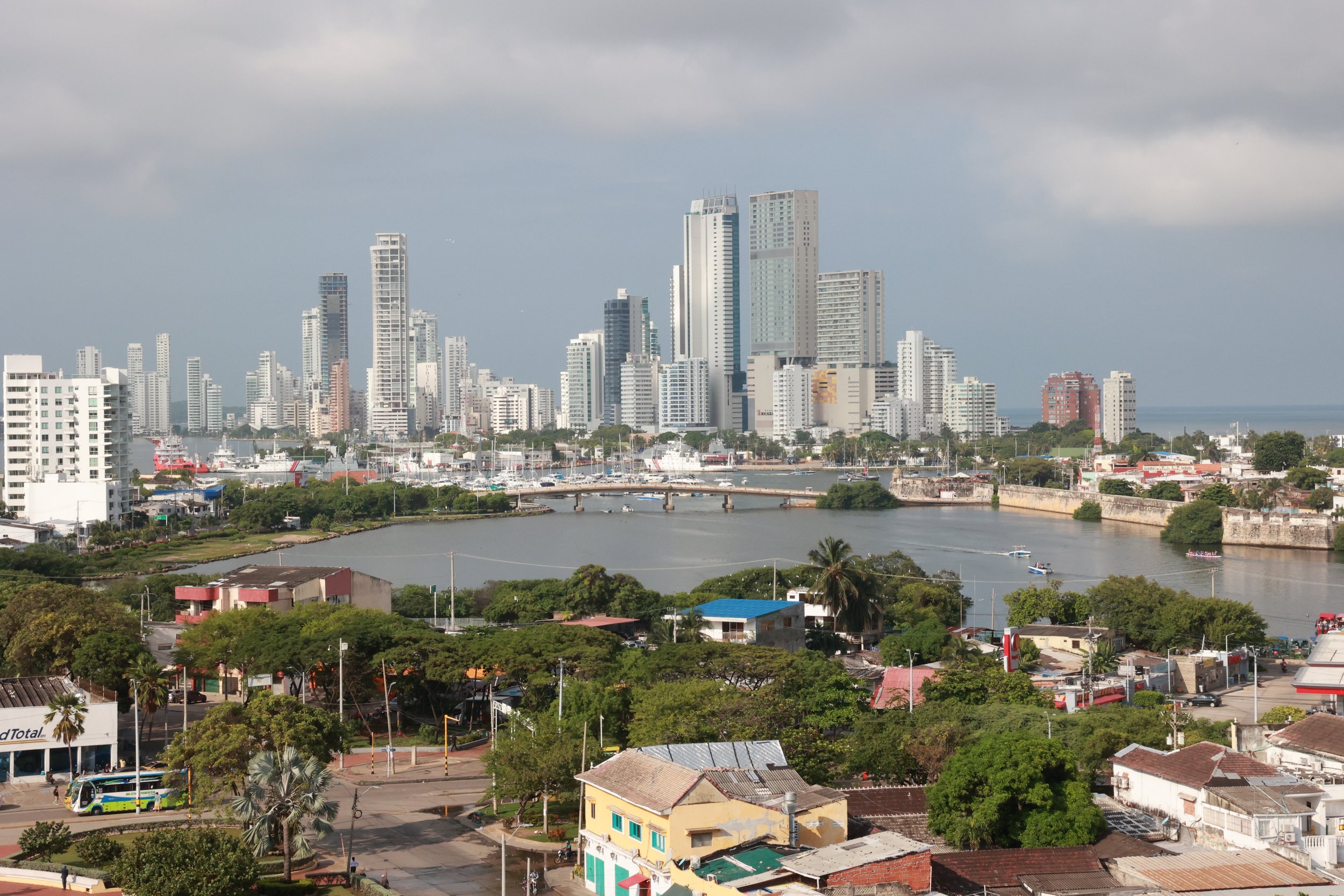
Cartagena's skyline seen from atop the old fortress walls — modern Bocagrande high-rises facing off against the 16th-century stone below.
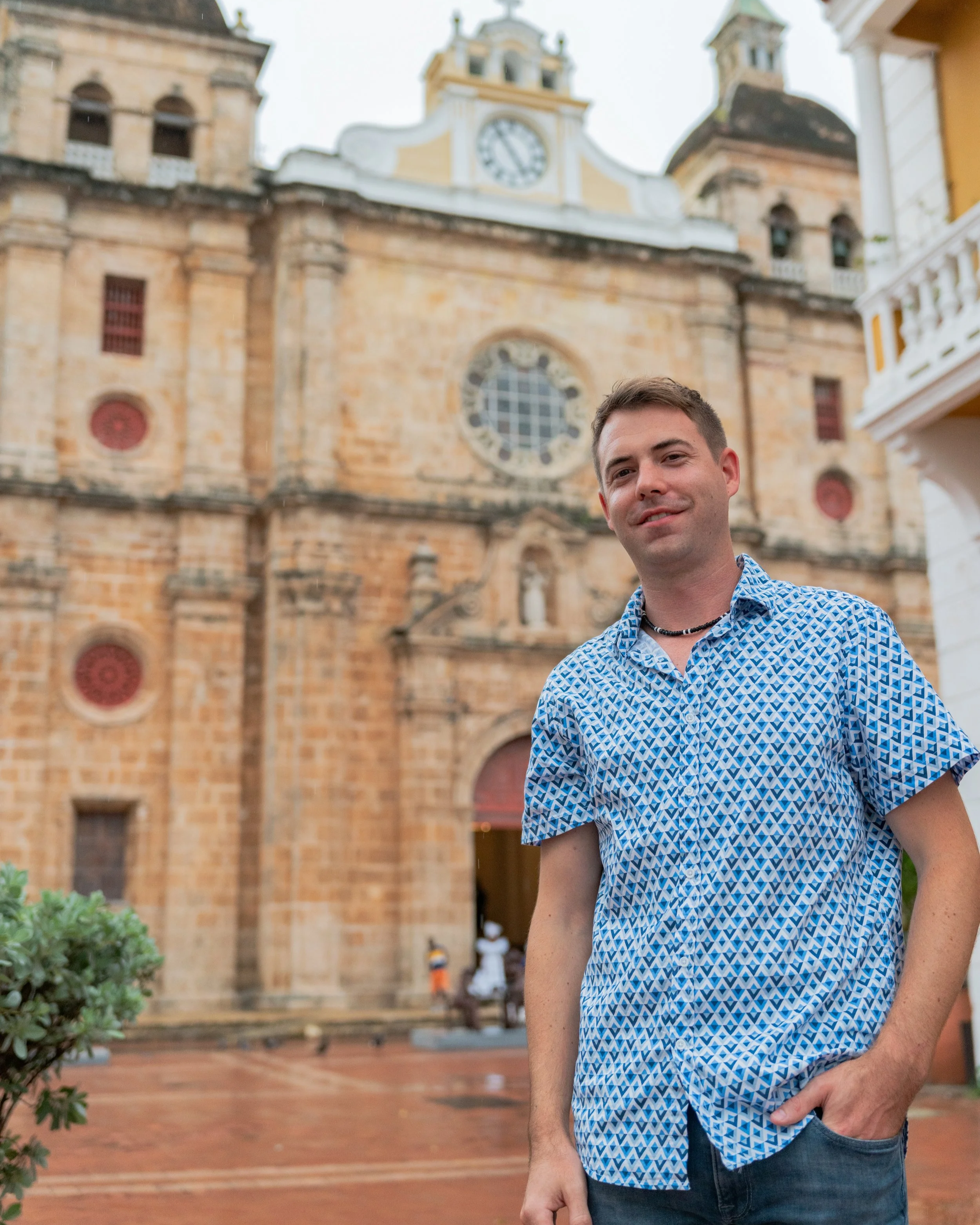
Standing in front of Iglesia de San Pedro Claver, named for the Jesuit missionary who dedicated his life to aiding the enslaved people who passed through Cartagena's port — one of the city's most striking colonial facades.
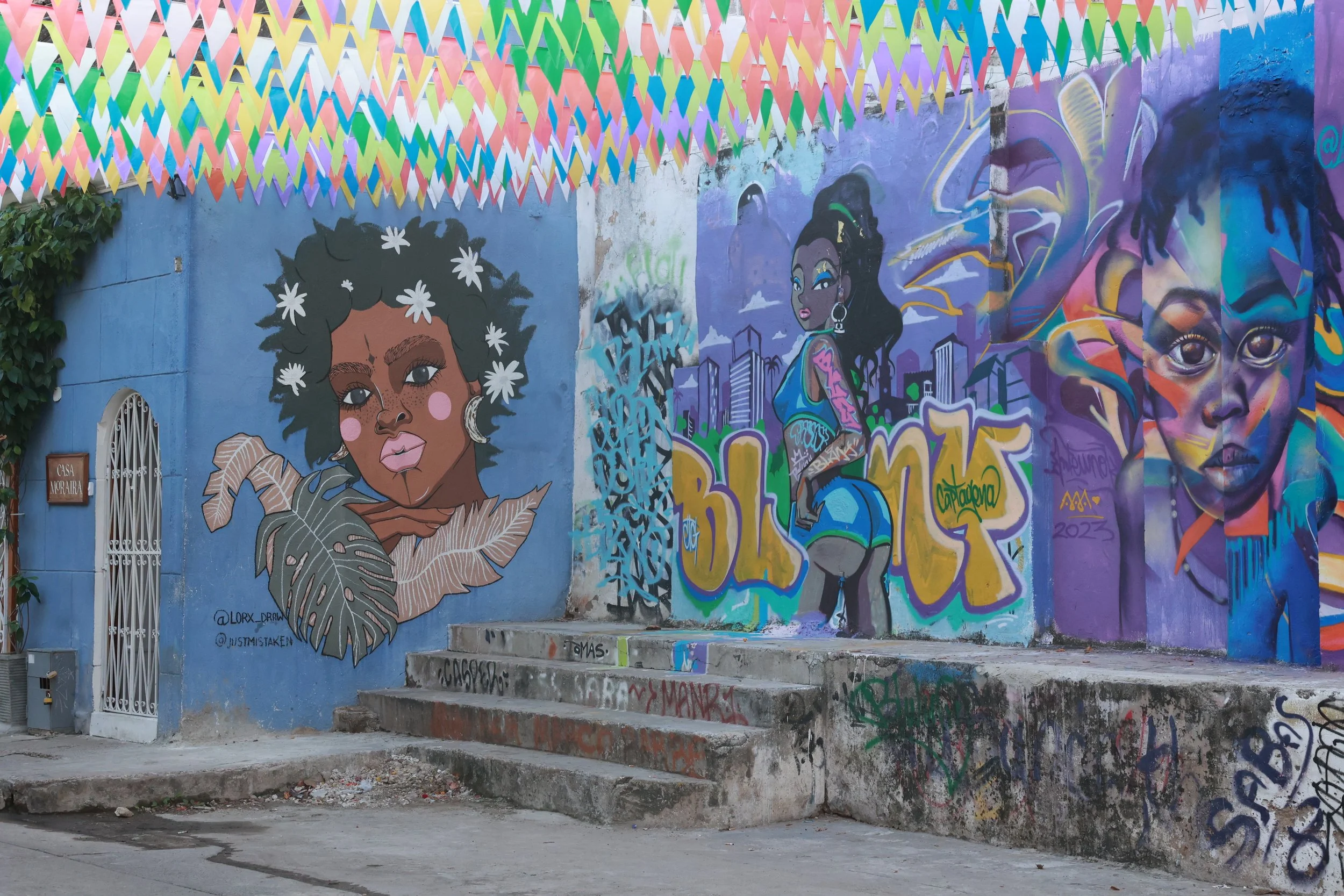
A wall of street art in Cartagena's Getsemaní neighborhood, the city's former working-class quarter turned open-air gallery, where nearly every surface doubles as a canvas.
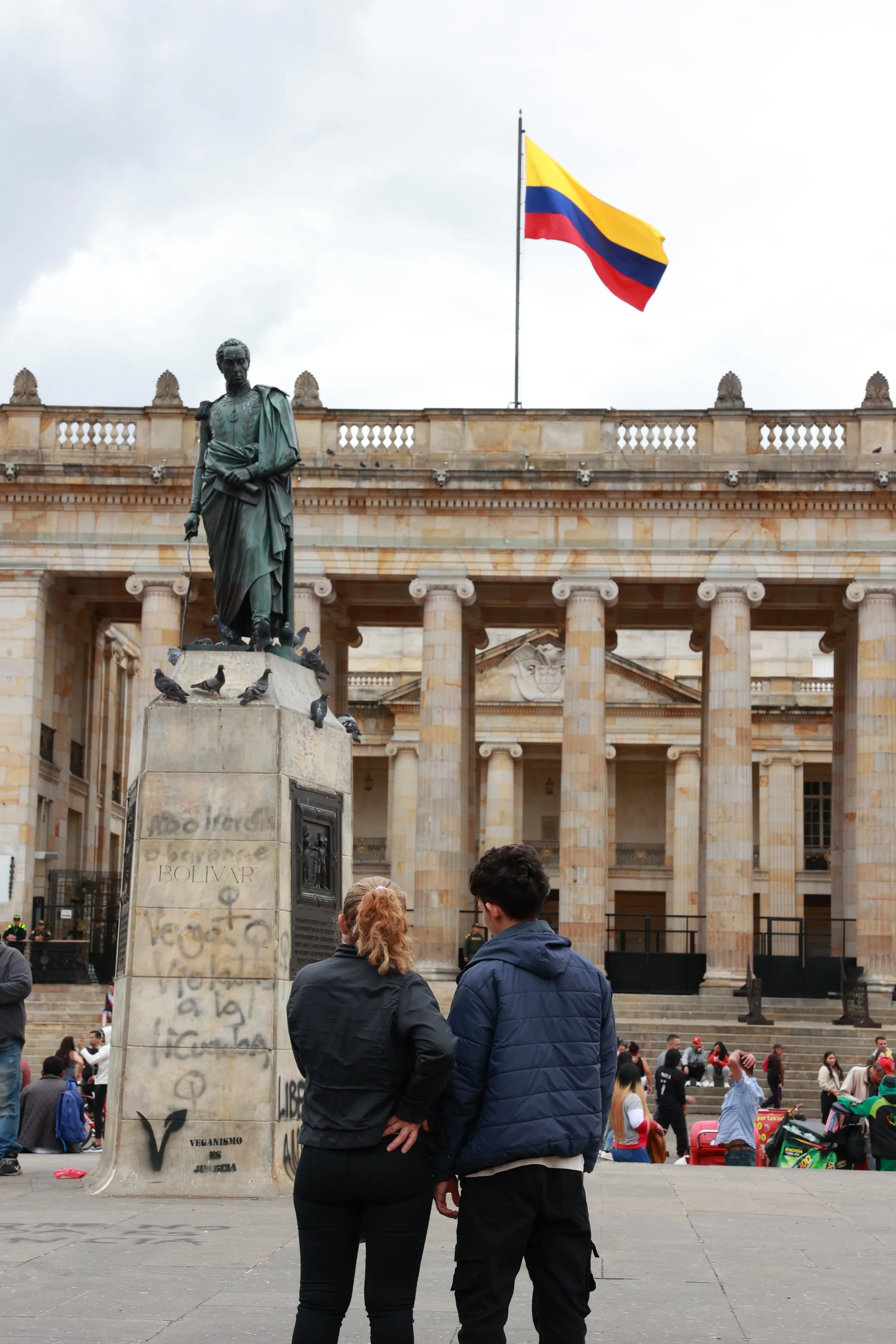
Plaza de Bolívar, Bogotá — the statue of the Liberator himself keeping watch over the Capitolio Nacional, Colombia's seat of Congress.